


20 Oct. 2026,
11:00-12:00
The Centre for Medical Science and Technology Studies (MeST)
Welcome to the Copenhagen Centre for Medical Science and Technology Studies (MeST)
We are one of the largest and most diverse assembly of scholars in the field of medical science and technology studies in Europe. Our research spans a wide array of topics, including personalized medicine, data sourcing in healthcare, new transplant technologies, algorithms, reproductive technologies, human-animal relations, stem cell research, and many more.
Follow us on LinkedIn to stay updated on the latest news and events from our center.
We take pride in our interdisciplinarity, including public health, sociology, history, anthropology, philosophy, psychology, medicine, and other fields. United by a common interest in exploring how medical technologies impact and interact with humans and healthcare systems, MeST scholars bring a wealth of perspectives to our research.
At MeST, we are committed to sharing our research findings with a broad audience. Our scholars publish academic papers and books, produce podcasts, curate museum exhibitions, and deliver lectures. We also teach a variety of courses in Public Health, Health Informatics and Medicine, ensuring that our knowledge reaches the next generation of scholars.
We play an active role in the international Science and Technology Studies (STS) research community, engaging in collaborations and exchanges with researchers worldwide. We welcome Medical STS scholars for short or long-term research stays and host a wide range of seminars and events.
Current projects
PREPARE
Professor Klaus Høyer
PREPARE for the delivery of socially robust stem cell medicine. An interdisciplinary research team with expertise in medical sociology, science and technology studies, science communication, bioethics, clinical translation regulation, and health economics will work with reNEW researchers at our three partner institutions to consider issues affecting potential impact, development, and delivery of stem cell medicine to the market. We will capture patient voices and concerns so that stem cell researchers can direct their product development toward what matters to the people they are trying to help.
See: https://renew.science/research/prepare/
TechnEmotion (1/9 2022 – 31/8 2025)
Anja Marie Bornø Jensen (PI), Zainab Sheikh, Sofie á Rogvi, Lesley Sharp
TechnEmotion deals with the interaction between technology and emotion in organ transplantation by exploring ethnographically the ethical and existential implications of new transplant technologies, such as xenotransplantation, new death criteria for organ donors, stem cell research, and ex-vivo technologies (organs in machines). Focusing on emotional practices among patients, families, healthcare professionals, researchers and policy makers, we investigate how humans are affected by new technologies and, conversely, we focus on the role and power of emotions when new transplant technologies are developed and implemented in clinical practice.
Microbes on the Mind
In the last decade, a new scientific research field has grown up around a startling insight: the trillions of bacteria that live in our gut seem to affect how the brain develops and functions. Whilst this scientific research is still at an early stage, results are already escaping the laboratory and catching the attention of journalists, doctors, and patients alike. This project therefore asks: what does microbiome research mean for our understanding of mental illness and its treatment? How is meaning created within and across the domains of science, media culture, and personal experience? The methods include open, experimental workshops in the Mind the Gut exhibition at Medical Museion, designed through collaboration with creative writers.
MeInWe (2017-2024)
Mette Nordahl Svendsen, Mie Seest Dam, Laura Emdal Navne, Iben Mundbjerg Gjødsbøl, Jeanette Bresson Ladegaard Knox, Clémence Pauline Cécile Pinel
Personalized Medicine in the Danish Welfare State (MeInWe) explores how strategies of tailoring diagnosis, treatment and prevention to individual genetic variability challenge existing ethical, organizational and regulatory frameworks in medicine. The project asks two central questions: How is “the personal” understood and established when genomic data are applied and exchanged in Danish health care? Which collectivities—e.g. species, ethnicity, nation, health care services, and ultimately the welfare state— are implied in constituting “the personal”? With these questions MeInWe critically assesses how strategies of personalized medicine draw boundaries around the person (the me), and how collectivities (the we) are shaped and negotiated in creating knowledge about the individual.
Bridging Boundaries
Henriette Langstrup, Jonas Thorborg Stage, Karsten Vrangbæk
Bridging Boundaries: Exploring the Organisational and Socio-Technical Impact of cross sectoral data sharing (SAMBLIK) in Diabetes Care. We investigate a data-sharing tool called SAMBLIK, which is being tested in general practice clinics, hospitals, and municipalities across three regions in Denmark. SAMBLIK allows health professionals to access shared visualizations of datapoints stored in the national patient database and apply these for clinical decision-making, interaction with patients and cross-sectoral communication. Focusing on the organizational and sociotechnical conditions for Samblik implementation in everyday clinical practices, we investigate the local and cross-sectoral data work among and between health professionals and how their relationship with patients is affected. As part of the project, we will establish a PPI panel with users of digital health technologies to shape our research.
Emotion Medicine (2025-2029)
Anja Marie Bornø Jensen (PI), Ida Vandsøe Madsen, Simone Anna Felding, Josephine Rudbech
Emotion Medicine is an anthropological project exploring the emotional dimensions of care and patient personhood during critical illness and death. Through ethnographic methods, it examines how musicians and animals interact with patients, families, and staff at hospitals and hospices, and how they create unique emotional moments of relief, hope, and connectivity.
The project is funded by a Carlsberg Foundation Semper Ardens Accelerate grant.
The Centre for Medical Science and Technology Studies (MeST) was established in 2010 by Professor (now Emerita) Lene Koch as a collaborative effort between scholars from the Section of Health Services Research and Medical Museion, Department of Public Health, University of Copenhagen. This initiative aimed to create a dynamic hub for interdisciplinary research in medical science and technology studies.
MeST has been guided by a series of distinguished directors, including Professor Mette Nordahl Svendsen, Associate Professor Henriette Langstrup, and Professor Ezio Di Nucci. Their leadership has been instrumental in shaping the center’s direction and fostering a culture of innovation and collaboration. Currently, MeST is headed by Associate Professor Anja Marie Bornø Jensen and Associate Professor Iben Gjødsbøl, who continue to drive forward the mission of the center.
Over the years, MeST researchers have successfully attracted significant funding for various research projects. Esteemed organizations such as the Carlsberg Foundation, Innovation Fund Denmark, The Velux Foundation, Novo Nordisk Foundation, the European Research Council, and Independent Research Fund Denmark have supported our work. This funding has enabled us to undertake groundbreaking research and contribute valuable insights to the field of medical science and technology studies.
Department of Public Health
University of Copenhagen
Øster Farimagsgade 5
PO Box 2099
DK-1014 Copenhagen K
Denmark
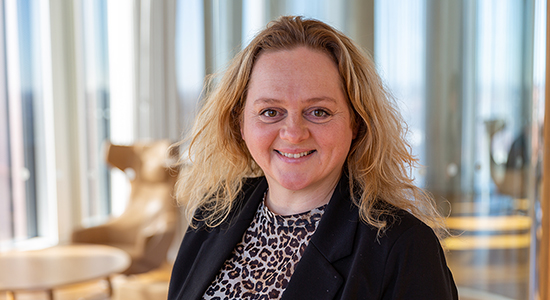
Head of Centre
Anja Marie Bornø Jensen
Associate professor
Phone: +45 35 33 73 17
Email: anja.jensen@sund.ku.dk

Staff
| Name | Title | Phone | |
|---|---|---|---|
| Search in Name | Search in Title | Search in Phone | |
| Bencard, Adam | Associate Professor | +4535320875 | |
| Bidoli, Andrea | Postdoc | +4535326492 | |
| Børsch, Anne Sofie | Postdoc | +4535331787 | |
| Dam, Mie Seest | Associate Professor | +4535337320 | |
| Di Nucci, Ezio | Professor | +4535334314 | |
| El-Mahdi, Miriam | PhD Fellow | +4535324853 | |
| Eriksen, Andreas Schmidt | PhD Fellow | +4535337110 | |
| Ferree, Patrick Landon | Academic Research Staff | +4535332831 | |
| Friis, Jan Kyrre Berg Olsen | Associate Professor | +4535327935 | |
| Gjødsbøl, Iben Mundbjerg | Associate Professor | +4535337318 | |
| Gregersen, Asmus Dall | PhD Fellow | ||
| Grundtvig, Anders | Research Assistant | ||
| Guldmann, Finn | Part-time Lecturer | ||
| Hagemann, Emma Blix Vittorio | PhD Fellow | +4535331563 | |
| Høyer, Klaus Lindgaard | Professor | +4535327996 | |
| Jensen, Anja Marie Bornø | Associate Professor | +4535337317 | |
| Knox, Jeanette Bresson Ladegaard | Senior Researcher | +4535337334 | |
| Langstrup, Henriette | Professor | +4535326203 | |
| Lykkeskov, Anne | Part-time Lecturer | ||
| Middleton, Alexandra Suzanne | Assistant Professor | ||
| Neubert, Jonas Jörg | PhD Fellow | +4535333734 | |
| Nygaard, Nikoline | External, Ph.d Student | +4535331941 | |
| Reventlow, Susanne | Professor, Head of Research | +4535327156 | |
| Risør, Torsten | Associate Professor | ||
| Skov, Lukas Deviletti | PhD Fellow | +4535325449 | |
| Skovdal, Morten | Professor | +4535337360 | |
| Skovgaard, Lea de Chiffre | Assistant Professor | ||
| Stage, Jonas Thorborg | Postdoc | ||
| Svendsen, Mette Nordahl | Professor | +4535327624 | |
| Sørensen, Peter Laurs | Part-time Lecturer | ||
| Tybjerg, Karin | Associate Professor | +4535323803 | |
| Vallgårda, Signild | Professor, Emerita | +4535327968 | |
| Wadmann, Sarah | Part-time Lecturer | ||
| Wagner, Isaac Anderson | Teaching Associate Professor | +4535334788 | |
| Whiteley, Louise | Associate Professor - Promotion Programme | ||
| á Rogvi, Sofie | PhD Fellow | +4535337773 |